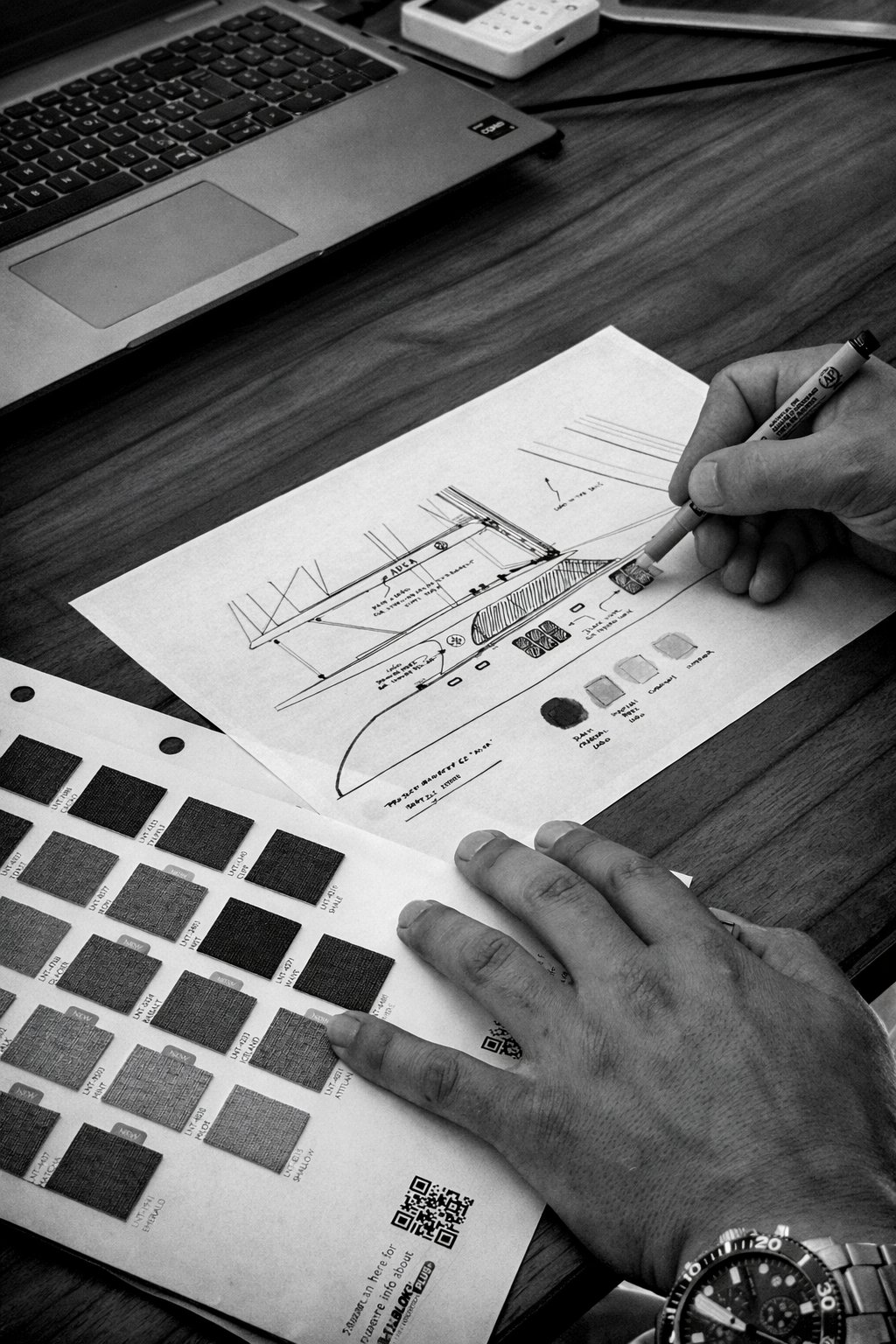
The premium catamaran market between 15 and 25 metres has changed. Owners are no longer looking for a boat: they are looking for a living space that reflects them. Refit has become an act of design, not just maintenance.
The era of bespoke
Across the projects we run, a full interior rework is now almost always part of the scope of a first major refit. It is no longer an option decided at the end of the yard period: it is the starting point of the design.
That changes the method. A design refit is framed upstream, on drawings and in 3D, before the first trade sets foot on board. It is the only way to keep the result coherent — and the budget with it.
Materials that make the difference
Next-generation synthetic teak (Durateak), technical composites and Bolon surfaces radically change the onboard experience. Material selection carries real weight in a design budget, and it is often what makes the biggest difference to perceived value, alongside the quay and at resale.
- Durateak decks: UV resistance, minimal maintenance, premium finish.
- Bolon surfaces: a high-end marine textile alternative.
- Carbon-kevlar composites: lightness and structural performance.
Ergonomics and living spaces
The 2026 trend is clear: more outdoor space, less interior partitioning. Owners want cockpits turned into genuine lounges, modular flybridges and cabins at hotel standard.
Those requests have structural consequences — weight, centre of gravity, load paths. They belong to naval architecture, not to decoration. That is exactly the role of the Nexus Marine Design & Consulting pillar: to arbitrate between the wish and the feasible, before the quote is signed.
The takeaway
A successful design refit is not a matter of taste but of sequence. Design first, pricing second, execution last. Reversing that order is the most common cause of overruns.